
Introduction
When you lose a tooth, you may wonder about the best way to replace missing teeth. Two common choices are dental implants and dentures. In this guide, we will compare Dental Implants vs Dentures. We will explain how each option works, who may benefit, and what to consider when making your choice. Understanding these tooth replacement options can help you feel confident about your dental health.
What Are Dental Implants?
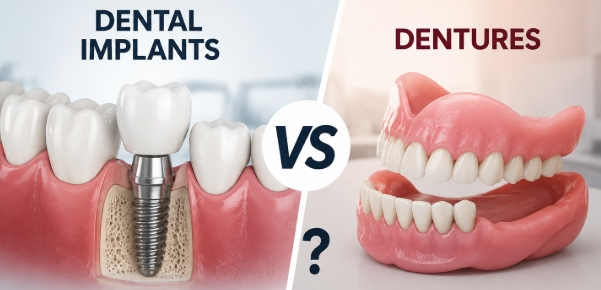
Dental implants are small posts, often made of titanium, placed into the jawbone. Over time, the bone grows around the implant, holding it firmly in place. Next, a connector and a crown (an artificial tooth) are attached to the post. This process can take several months, as healing is needed between steps.
Usually, dental implants are used for adults with healthy gums and enough bone in their jaw. However, some people may need extra procedures, like bone grafting, if their bone is too thin. Dental implants look and feel like natural teeth, making them a popular choice for many.
What Are Dentures?
Dentures are removable devices that replace missing teeth. They can be full dentures, which replace all teeth in the upper or lower jaw, or partial dentures, which fill gaps when some teeth remain. Dentures rest on the gums and are usually made from acrylic or a mix of acrylic and metal.
For example, people who have lost several teeth or all their teeth may benefit from dentures. Dentures are custom-made to fit your mouth. With proper care, they can help you eat and speak more easily.
Key Differences Between Dental Implants and Dentures
Pros and Cons of Dental Implants
Pros and Cons of Dentures
Factors to Consider When Choosing
Choosing between dental implants and dentures depends on many things. For instance, your age and bone health matter. Younger people or those with strong jawbones may do better with implants. However, if you have bone loss, dentures might be easier.
Also, your lifestyle and budget play a role. Implants cost more but last longer. Dentures are more affordable but may need more care. Good oral hygiene is important for both options. Think about what fits your daily routine and long-term needs.
How to Decide: Questions to Ask Your Dentist
Before you decide, talk with your dentist. Here are some helpful questions to ask:
By asking these questions, you can make a choice that matches your needs and lifestyle.
Safety, Risks, and Success Rates
Both dental implants and dentures are safe when done by a trained dentist. According to the World Health Organization (WHO) and the Centers for Disease Control and Prevention (CDC), dental implants have a high success rate, often above 95%. Still, some risks include infection, nerve injury, or implant failure, especially if you smoke or have certain health conditions.
Dentures are also safe, but they can cause gum irritation or mouth sores if not fitted well. Regular dental check-ups help catch problems early. Most people adjust well to their tooth replacement option with time and care. Reliable studies show that both methods can improve your ability to eat, speak, and smile with confidence.
Conclusion
Both dental implants and dentures can help replace missing teeth, but the right option depends on your oral health, bone support, lifestyle, and treatment goals. A detailed dental evaluation can help determine the most suitable solution for restoring function, comfort, and confidence.
Confused between dental implants and dentures for missing teeth?
Consult Dr. Sneha Goud for personalised guidance and the right tooth replacement solution for your smile.